
Herbs
Salvia officinalis 'Berggarten Variegated'
Variegated Berggarten sage
Also known as: Berggarten Variegated garden sage
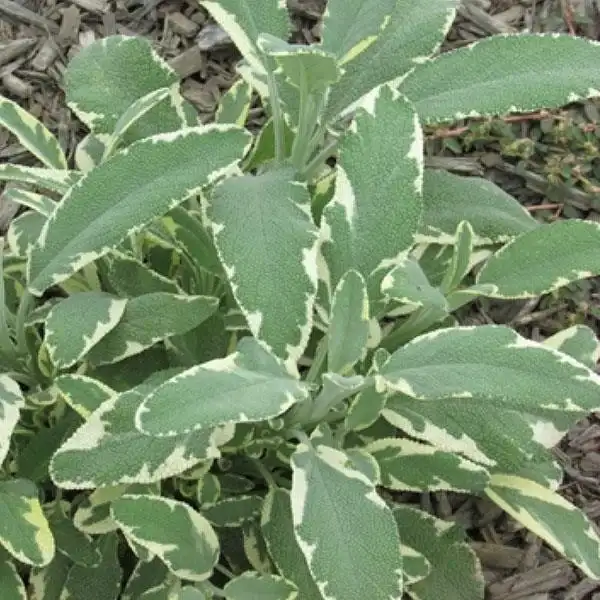
Cream-edged, gray-green leaves give this culinary sage a brighter look than plain Berggarten. Its aromatic foliage forms a bushy, woody-based plant for herb beds, sunny borders and pots; light purple flowers may appear in early summer. Good drainage is especially important in winter. Protect from excess winter wet; the RHS H5 rating describes UK conditions, not guaranteed Kentucky survival.
At a glance
- Sun
- Full sun
- Mature size
- About 1½–3¼ ft. (RHS range) tall × About 1½–3¼ ft. (RHS range) wide
- Water
- Moist, well-drained to well-drained soil
- Hardiness
- RHS H5 (UK rating: −15 to −10°C; not a USDA zone)
- Bloom
- Light purple; early summer
Sizes & prices
- 4.5"$6.99
Catalog updated September 8, 2026. This is not a live stock count; please call to confirm availability and price.
Ask about this plantSelect a section to expand.
Resistance & tolerances
- Drought
- Tolerant once established.
- Wet soil
- Avoid waterlogging, especially in winter.
Culinary uses
- Edible parts
- Aromatic leaves.
- Uses
- Season stuffing, sausages and savory dishes; use fresh or dried.
Seasonal interest
- Foliage
- Gray-green leaves with cream margins; evergreen in suitable conditions.
Growing & care
- Soil
- Moderately fertile, freely draining soil.
- Pruning
- Light spring shaping; trim spent flower spikes.
- Harvest
- Pick young leaves during active growth.
Shape lightly in spring and remove finished flower spikes. Protect roots from excess winter wet.
Sources & photo credits
University of Minnesota Extension
Photo: Berggarten Variegated sage ('Berggarten Variegated'), photo courtesy of Ball Horticultural Company; resized for web without enlargement. · Ball customer promotional-use photo license
Image notes: Berggarten Variegated sage ('Berggarten Variegated'), photo courtesy of Ball Horticultural Company; resized for web without enlargement. Propagation is prohibited.
Reviewed 2026-09-29. Growing conditions vary by location.