
Herbs
Origanum majorana
Sweet marjoram
Also known as: Knotted marjoram
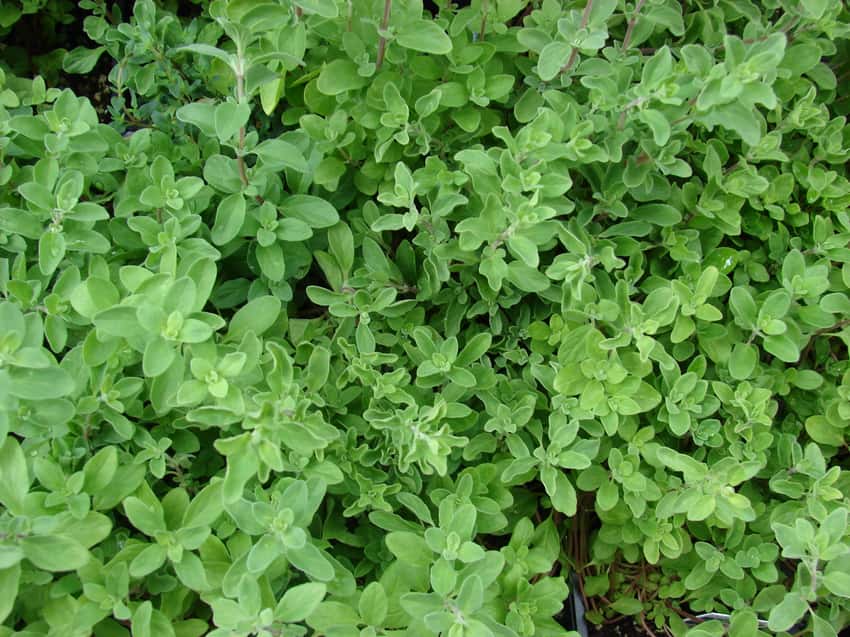
A tender, bushy herb with soft gray-green aromatic leaves and small white-to-pink summer flowers. Suitable for herb beds, window boxes and pots. Cut stems before flowering for bushy growth.
At a glance
- Sun
- Full sun
- Mature size
- 1–2 ft. tall × 1–2 ft. wide
- Water
- Dry to moderate; excellent drainage
- Hardiness
- USDA zones 9–10; grown as an annual in cold climates
- Bloom
- White to pale pink; July–August
Sizes & prices
- 3.5"$6.99
Catalog updated September 8, 2026. This is not a live stock count; please call to confirm availability and price.
Ask about this plantSelect a section to expand.
Resistance & tolerances
- Drought
- Tolerant once established.
- Wet soil
- Saturated, poorly drained soil causes rot.
- Deer & rabbits
- Resistant, not browse-proof.
Resistance is not a guarantee; deer and rabbits may browse any plant.
Pollinators & wildlife
- Attracts
- Bees
Keep in mind: Can be toxic to pets; keep animals from grazing.
Culinary uses
- Edible parts
- Leaves and flowers; sweet-spicy flavor.
- Try in
- Soups, sauces, dressings, stuffing and roasted vegetables.
- Harvest
- Pick before flowering; use fresh or dried.
Seasonal interest
- Form
- Small, bushy mound of aromatic foliage.
Growing & care
- Local winter
- Usually grown as an annual; indoor overwintering may be difficult.
- Harvest
- Snip leaves and leafy stems as needed during active growth. Harvest after dew dries; dry or freeze suitable cuttings for later use.
Trim stems before flowering to encourage bushy growth. Avoid saturated soil. Container plants can be brought indoors before frost, but overwintering is not always successful.
Sources & photo credits
University of Minnesota Extension
Photo: Forest & Kim Starr · CC BY 3.0

Image notes: Sweet marjoram foliage. species photo; uncropped.
Reviewed September 21, 2026. Growing conditions vary by location.