
Herbs
Artemisia dracunculus 'Sativa'
French tarragon
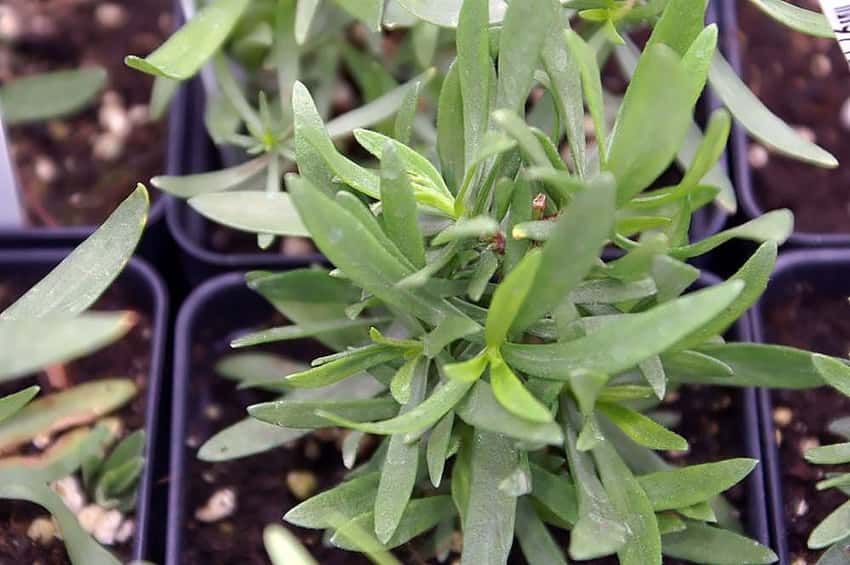
A leafy perennial with narrow green foliage and a distinctive anise-like aroma. French tarragon is the culinary selection, distinct from seed-grown Russian or wild tarragon. Cut dead growth to the ground in early spring.
At a glance
- Sun
- Full sun
- Mature size
- 20–30 in. tall × About 12 in. wide
- Water
- Dry to moderate; well-drained soil
- Hardiness
- USDA zones 5–8
- Bloom
- Shy to flower; small pale yellow heads in late summer
Sizes & prices
- 4.5''$6.99
Catalog updated September 8, 2026. This is not a live stock count; please call to confirm availability and price.
Ask about this plantSelect a section to expand.
Resistance & tolerances
- Drought
- Tolerant of dry conditions.
- Wet soil
- Avoid soggy roots, especially in winter.
- Humidity
- Hot, humid conditions can cause decline.
- Deer & rabbits
- Generally resistant, not browse-proof.
Resistance is not a guarantee; deer and rabbits may browse any plant.
Keep in mind: Can irritate skin; keep pets and horses from grazing.
Culinary uses
- Use
- French selection grown for anise-scented culinary leaves.
- Identity
- Not seed-grown Russian or wild tarragon.
Seasonal interest
- Form
- Upright leafy perennial; French tarragon rarely blooms.
Growing & care
- Propagation
- Use division or cuttings, not seed.
- Renewal
- Divide older clumps when vigor declines.
- Harvest
- Snip leaves and leafy stems as needed during active growth. Harvest after dew dries; dry or freeze suitable cuttings for later use.
Avoid wet soil, especially in winter. Shelter a container through cold, wet weather. Propagate this selection by cuttings or division, not seed.
Sources & photo credits
University of Minnesota Extension
Botanical name: Kew Science.
Photo: David J. Stang · CC BY-SA 4.0

Image notes: Representative plant photograph; resized and compressed, not cropped. Not a photograph of current nursery stock.
Reviewed September 21, 2026. Growing conditions vary by location.