
Herbs
Laurus nobilis
Bay laurel
Also known as: Sweet bay · Grecian laurel · True laurel
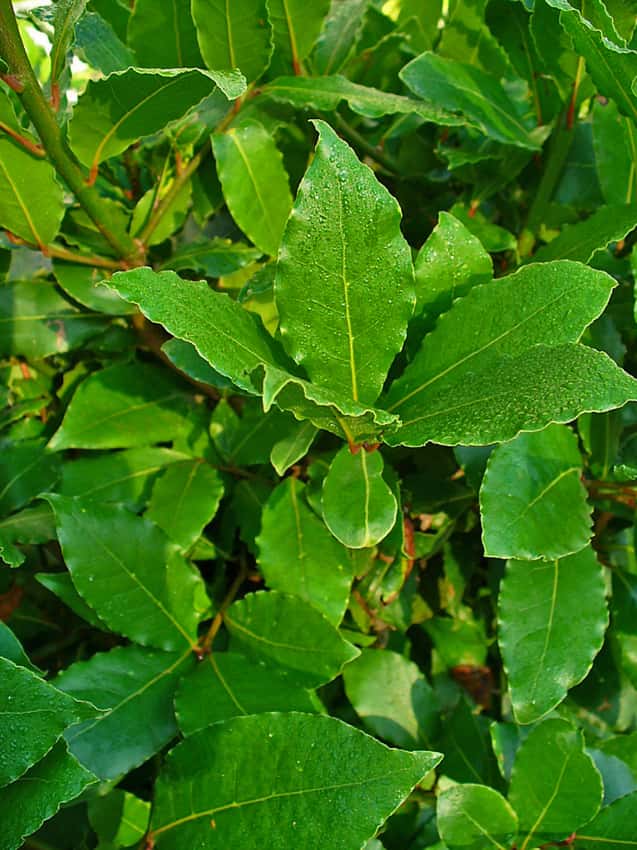
An evergreen tree or shrub with glossy, aromatic leaves. It responds to shaping and can be grown in containers. Overwinter containers indoors; protect from frost.
At a glance
- Sun
- Full sun to part shade
- Mature size
- Height: 8–12 ft. in warm-climate gardens; smaller with pruning · Spread: 8–30 ft. in the ground
- Water
- Moderate; moist, well-drained soil
- Hardiness
- USDA zones 8b–10
- Bloom
- Small spring flowers; fruit requires a female plant.
Sizes & prices
- 4.5"$29.99
- 6"$34.99
- 8"$41.99
Catalog updated September 8, 2026. This is not a live stock count; please call to confirm availability and price.
Ask about this plantSelect a section to expand.
Resistance & tolerances
- Deer
- Listed as resistant; browsing remains possible.
- Wet soil
- Tolerates occasional dryness or wetness with drainage.
Resistance is not a guarantee; deer and rabbits may browse any plant.
Pollinators & wildlife
- Birds
- Attracted to this plant
Keep in mind: Remove whole leaves before serving: tough edges can cause choking or injury. Keep pets and horses from eating the plant.
Culinary uses
- Use
- Fresh or dried leaves to flavor soups and pasta dishes.
- Serving
- Infuse during cooking, then remove the leaf.
Seasonal interest
- Form
- Evergreen tree or shrub; can be shaped as topiary.
Growing & care
- Health
- Watch for scale and root rot.
- Shape
- Species guidance applies to both catalog forms; photograph is not a topiary shape.
- Harvest
- Pick leaves as needed year-round. Use fresh or dry them for storage; remove whole leaves before serving.
Grow in a container where winters are cold. Bring indoors before fall frost to a cool, bright location. A species photo does not represent a topiary shape.
Sources & photo credits

Image notes: Bay laurel leaf detail, not a topiary form. species photo; uncropped.
Reviewed September 21, 2026. Growing conditions vary by location.