
Herbs
Ocimum basilicum var. thyrsiflorum
Thai basil
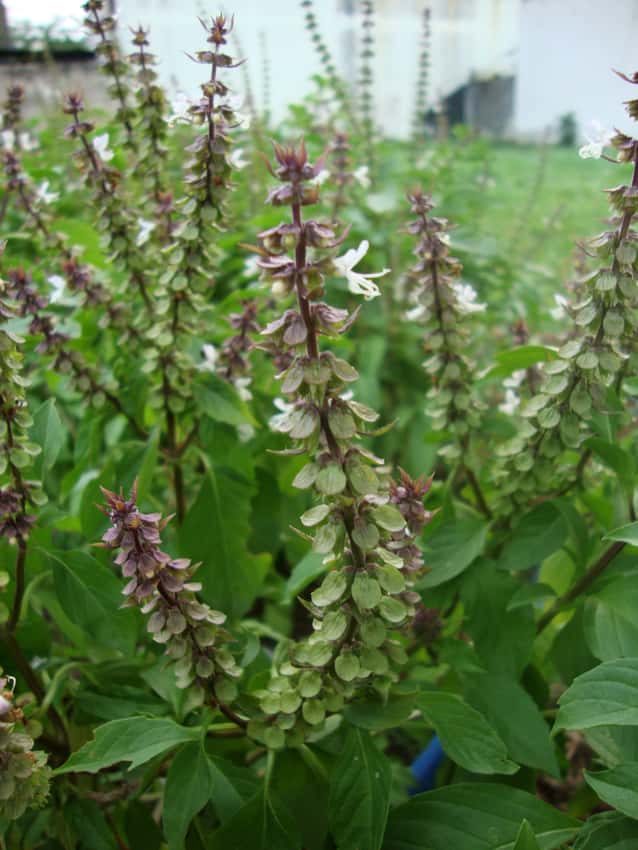
Narrow leaves, purple stems and an anise-like flavor distinguish Thai basil. A useful culinary herb for sunny containers and kitchen gardens. Grow in moist, well-drained soil; avoid excessive nitrogen.
At a glance
- Sun
- Full sun
- Water
- Moist, well-drained soil
- Life cycle
- Frost-tender; grown as an annual
Sizes & prices
- 3.5''$4.99
Catalog updated September 8, 2026. This is not a live stock count; please call to confirm availability and price.
Ask about this plantSelect a section to expand.
Resistance & tolerances
- Wet soil
- Keep moist, but provide drainage; not a standing-water plant.
- Deer & rabbits
- Species listed as resistant; browsing remains possible.
Resistance is not a guarantee; deer and rabbits may browse any plant.
Culinary uses
- Edible parts
- Leaves.
- Use
- Fresh or dried to season soups, sauces and vegetables.
Seasonal interest
- Form
- Branching herb with narrow leaves and purple stems.
Growing & care
- Harvest
- Snip shoot tips before flowers open; leave leafy growth for regrowth.
- Pruning
- Pinch growing tips for bushier growth.
- Winter
- Set outside after frost; protect from autumn cold.
- Health
- Allow airflow and avoid wetting foliage late in the day.
Pinch shoot tips for branching. Size varies with selection; this listing does not imply the cultivar Siam Queen.
Sources & photo credits
Iowa State University Extension
Botanical name: Kew Science.

Image notes: Representative Thai basil type, cultivar unspecified. Original framing retained; display versions resized and compressed.
Reviewed 2026-09-29. Growing conditions vary by location.