
Grasses
Tripidium ravennae
Ravenna grass
Also known as: Hardy pampas grass · Erianthus ravennae · Saccharum ravennae
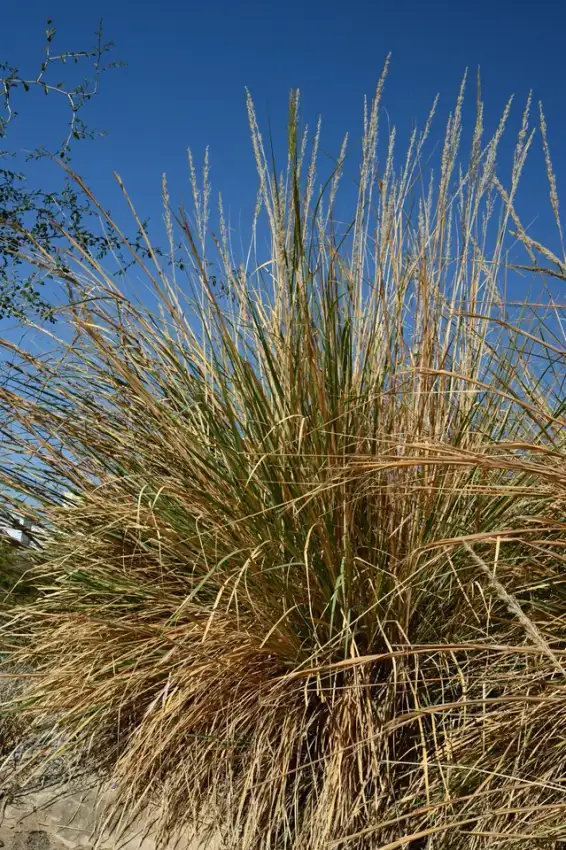
Very tall stalks carry large, feathery plumes above a broad clump of coarse foliage. The pale plumes and dry stems bring movement and height into fall and winter. Give this dramatic grass substantial space in a sunny, well-drained position, and monitor seedlings because it can spread beyond its intended planting.
At a glance
- Sun
- Full sun
- Mature size
- 6–20 ft. including flower stalks tall × 4–6 ft. wide
- Water
- Dry to average
- Hardiness
- USDA 5–9
- Bloom
- Late summer; persistent plumes.
Sizes & prices
- #5Call for price
Catalog updated September 8, 2026. This is not a live stock count; please call to confirm availability and price.
Ask about this plantSelect a section to expand.
Resistance & tolerances
- Drought
- Tolerant once established.
- Wet soil
- Poor choice for persistently wet ground.
Keep in mind: Missouri Botanical Garden lists Ravenna grass as invasive in the St. Louis region. Kew records it as introduced in Kentucky. Consider a native grass instead; if planted, prevent seedlings from spreading.
Seasonal interest
- Habit
- Large, upright clump.
Growing & care
- Pruning
- Cut back in late winter or early spring before new growth.
- Soil
- Well-drained, not overly rich or wet.
- Maintenance
- Wear gloves; leaf edges are sharp. Remove unwanted seedlings.
Sources & photo credits
Kew Science, Plants of the World Online
Photo: Krzysztof Ziarnek, Kenraiz · CC BY-SA 4.0

Reviewed September 29, 2026. Growing conditions vary by location.