
Fruits
Castanea
Chestnut
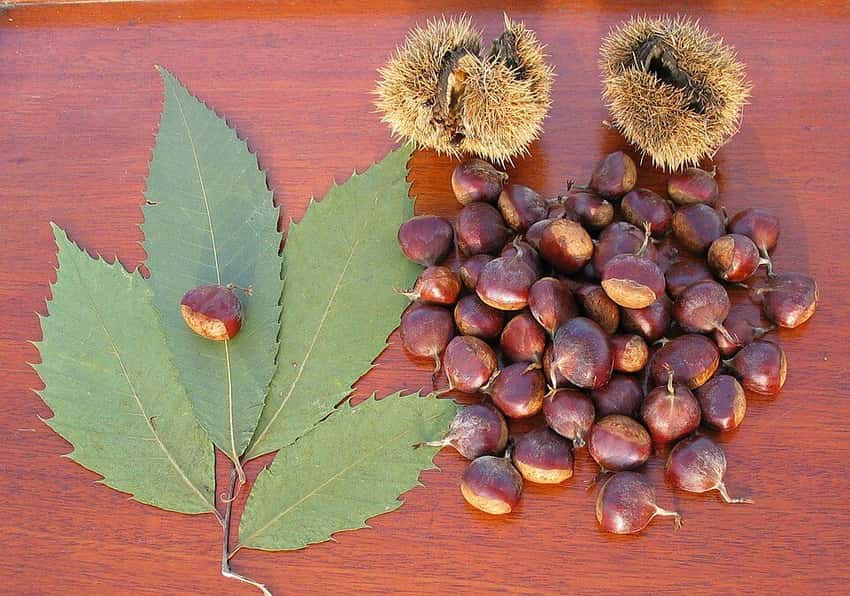
A chestnut tree grown for its edible nuts and broad shade. The abbreviated inventory label does not establish a species or cultivar, so size, blight resistance and pollination partners depend on the actual plant supplied.
At a glance
- Sun
- Full sun
- Water
- Moist, well-drained soil
Sizes & prices
- #7$169.99
Catalog updated September 8, 2026. This is not a live stock count; please call to confirm availability and price.
Ask about this plantSelect a section to expand.
Keep in mind: Confirm the species or hybrid on the stock tag before planting; “Castanae d.” is incomplete.
Fruit & harvest
- Pollination
- Plant a compatible, genetically different chestnut nearby for reliable nut set.
Growing & care
- Care & pruning
- Allow room for a large tree and keep young trees watered while establishing. Most chestnuts need pollen from a genetically different compatible tree for reliable nuts.
- Harvest
- Chinese-chestnut reference: collect ripe fallen nuts promptly in autumn. Wear heavy gloves around the prickly burs; harvest timing varies by selection.
- Winter
- Cold tolerance varies by species and hybrid. Missouri Extension rates Chinese chestnuts more cold-hardy than European and Japanese chestnuts; choose the named stock for your site.
- Size & habit
- Size depends on species or hybrid. Allow room for its mature canopy.
Sources & photo credits
University of Missouri Extension
University of Missouri Extension
University of Missouri Extension
Photo: Timothy Van Vliet (image resized for display) · CC BY-SA 3.0

Size & selection: Chestnut species differ greatly in size. Choose the species or hybrid first, then allow its full mature height and canopy width; a generic chestnut label does not establish a compact tree.
Reviewed October 1, 2026. Growing conditions vary by location.