
Fruits
Vaccinium corymbosum 'Duke'
Duke blueberry
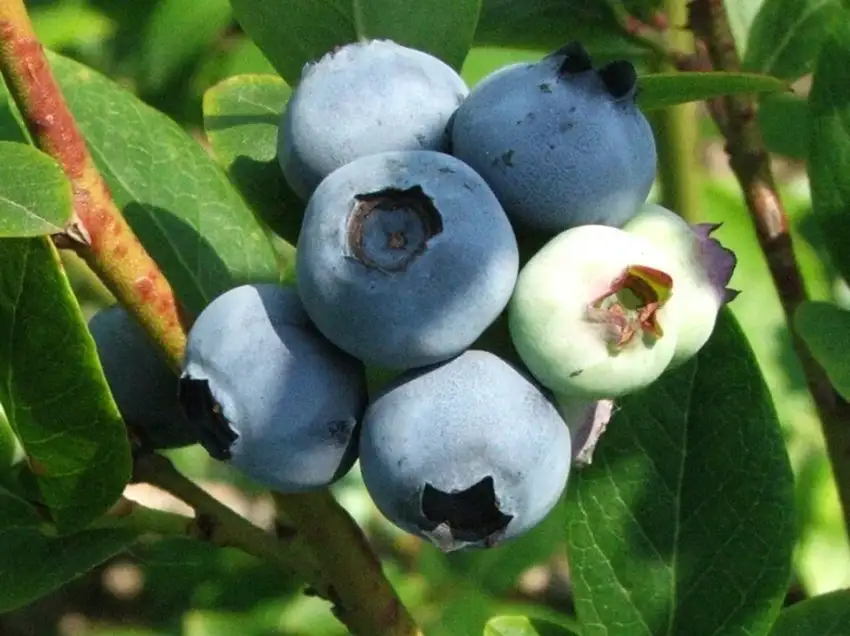
An early-ripening northern highbush blueberry with firm fruit and a relatively late bloom that helps it avoid some spring frost.
At a glance
- Sun
- Full sun
- Mature size
- 5–7 ft. (Extension cultivar reference) tall × 4–6 ft. (nursery estimate) wide
- Water
- Consistent moisture; well-drained soil
- Hardiness
- USDA zones 3–8 (species reference; cultivar and rootstock may differ)
Sizes & prices
- #3Call for price
Catalog updated September 8, 2026. This is not a live stock count; please call to confirm availability and price.
Ask about this plantSelect a section to expand.
Pollinators & wildlife
- Attracts
- Bees
Fruit & harvest
- Harvest
- Early-to-midseason summer crop.
- First crop
- Expect light crops for the first 2–3 years; yields increase as the plant matures.
- Pollination
- A second compatible blueberry cultivar usually improves fruit set and berry size.
Growing & care
- Soil
- Acidic, approximately pH 4.5–5.5
- Pruning
- Prune before spring growth. Remove dead or weak wood and older, unproductive canes at the base; retain vigorous one-year-old wood for fruit.
- Soil pH
- Test soil before planting. Blueberries need acidic, well-drained soil; a pH of 4.0–5.5 is the extension reference range.
Test soil before planting; blueberries require acidic soil. Mulch with organic material and water consistently. Prune established shrubs while dormant to remove older, less productive wood.
Sources & photo credits
University of Minnesota Extension
University of Minnesota Extension
Photo: Opioła Jerzy (Poland) / CC BY 2.5; resized and converted to WebP · CC BY 2.5

Image notes: Ripe highbush blueberries. Species shown, not the Duke cultivar. Opioła Jerzy (Poland) / CC BY 2.5. Resized and converted to WebP.
Reviewed October 1, 2026. Growing conditions vary by location.