
Fruits
Asimina triloba
Pawpaw
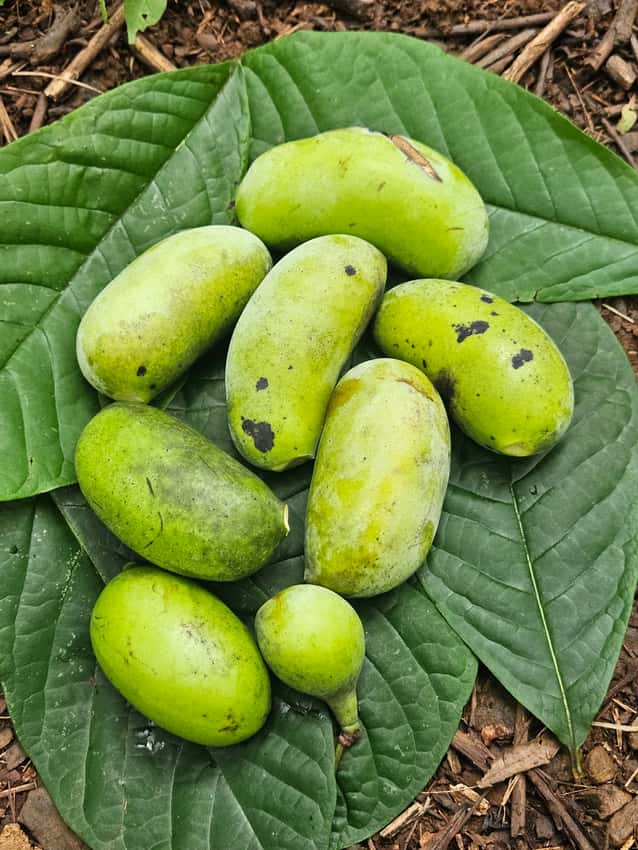
A small native understory tree with large tropical-looking leaves and custardy, aromatic fruit. It also supports zebra swallowtail caterpillars. Plant two genetically different trees if you want a dependable fruit crop.
At a glance
- Sun
- Part shade when young; more sun for fruiting trees
- Mature size
- 15–30 ft. tall × 15–30 ft. wide
- Water
- Moist, well-drained soil; tolerates occasional wetness.
- Hardiness
- USDA zones 5–9 (species reference; cultivar and rootstock may differ)
Sizes & prices
- #1$29.99
- #2$74.99
- #5$89.99
- 2"Call for price
- 4"$14.99
- B&B$89.99
- StueweCall for price
Catalog updated September 8, 2026. This is not a live stock count; please call to confirm availability and price.
Ask about this plantSelect a section to expand.
Resistance & tolerances
- Deer
- Deer generally avoid pawpaw foliage, though young trees still need protection from rubbing and other damage.
Resistance is not a guarantee; deer and rabbits may browse any plant.
Native range
- Native range / parentage
- Eastern North America; native to Ohio, Kentucky and Indiana Species native to Kentucky.
- Tristate native status
- Eastern North America; native to Ohio, Kentucky and Indiana
Fruit & harvest
- Tri-state harvest
- Pawpaws generally ripen late summer to early fall in the region.
- Pollination
- Two genetically distinct pawpaw trees are generally needed for reliable fruit set.
Growing & care
- Fruit
- Ripens late summer–early fall
- Native
- Native to Kentucky, Ohio and Indiana
- Pruning
- Fruit grows on one-year-old stems. Prune older trees to encourage fresh growth and remove unwanted root sprouts to keep the planting open.
Keep young trees evenly moist and protect them from harsh exposure while establishing. Fruit set usually needs pollen from a genetically different pawpaw tree; two grafts of the same cultivar do not meet that requirement. Eat only the ripe pulp, not seeds or skin.
Sources & photo credits

Image notes: Harvested pawpaw fruit and foliage. Species photo.
Reviewed October 1, 2026. Growing conditions vary by location.