Fruits
Malus domestica 'Braeburn'
Braeburn apple
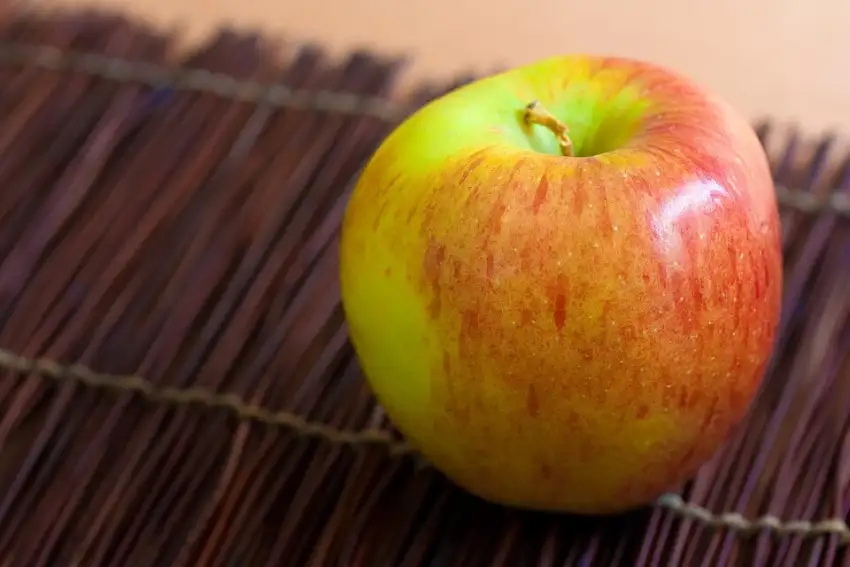
A crisp, sweet-tart eating apple with red-striped skin. This late-season cultivar is also useful for baking.
At a glance
- Sun
- Full sun
- Water
- Even moisture; well-drained soil
- Hardiness
- USDA zones 4–9 (species reference; cultivar and rootstock may differ)
Sizes & prices
- #2$42.99
Catalog updated September 8, 2026. This is not a live stock count; please call to confirm availability and price.
Ask about this plantSelect a section to expand.
Pollinators & wildlife
- Attracts
- Bees
Fruit & harvest
- Tri-state harvest
- Late season, usually October.
- First bearing
- About 3–7 years after planting, depending strongly on rootstock (dwarf trees are usually earlier).
- Harvest
- Late summer–fall, depending on cultivar and season
- Pollination
- Most apples need pollen from a different, compatible apple cultivar that blooms at the same time. Ask us about pairings.
Growing & care
- Rootstock & size
- For grafted fruit trees, mature size and time to fruit depend on the rootstock as well as pruning. Check the individual tree tag when selecting planting space.
- Size & rootstock
- Rootstock controls mature size, spacing and time to first crop. Match the nursery tree’s rootstock to your available space before planting.
Plant in full sun. Prune during dormancy for an open, manageable canopy. Thin an overly heavy fruit set so remaining apples have room to develop.
Sources & photo credits
University of Georgia Extension
University of Missouri Extension
Oregon State University Extension
Photo: Veganbaking.net from USA / CC BY-SA 2.0; resized and converted to WebP · CC BY-SA 2.0

Image notes: Braeburn apple showing ripe fruit color. Veganbaking.net from USA / CC BY-SA 2.0. Resized and converted to WebP.
Reviewed September 25, 2026. Growing conditions vary by location.